
How Much Does a Custom Land Rover Defender Cost?
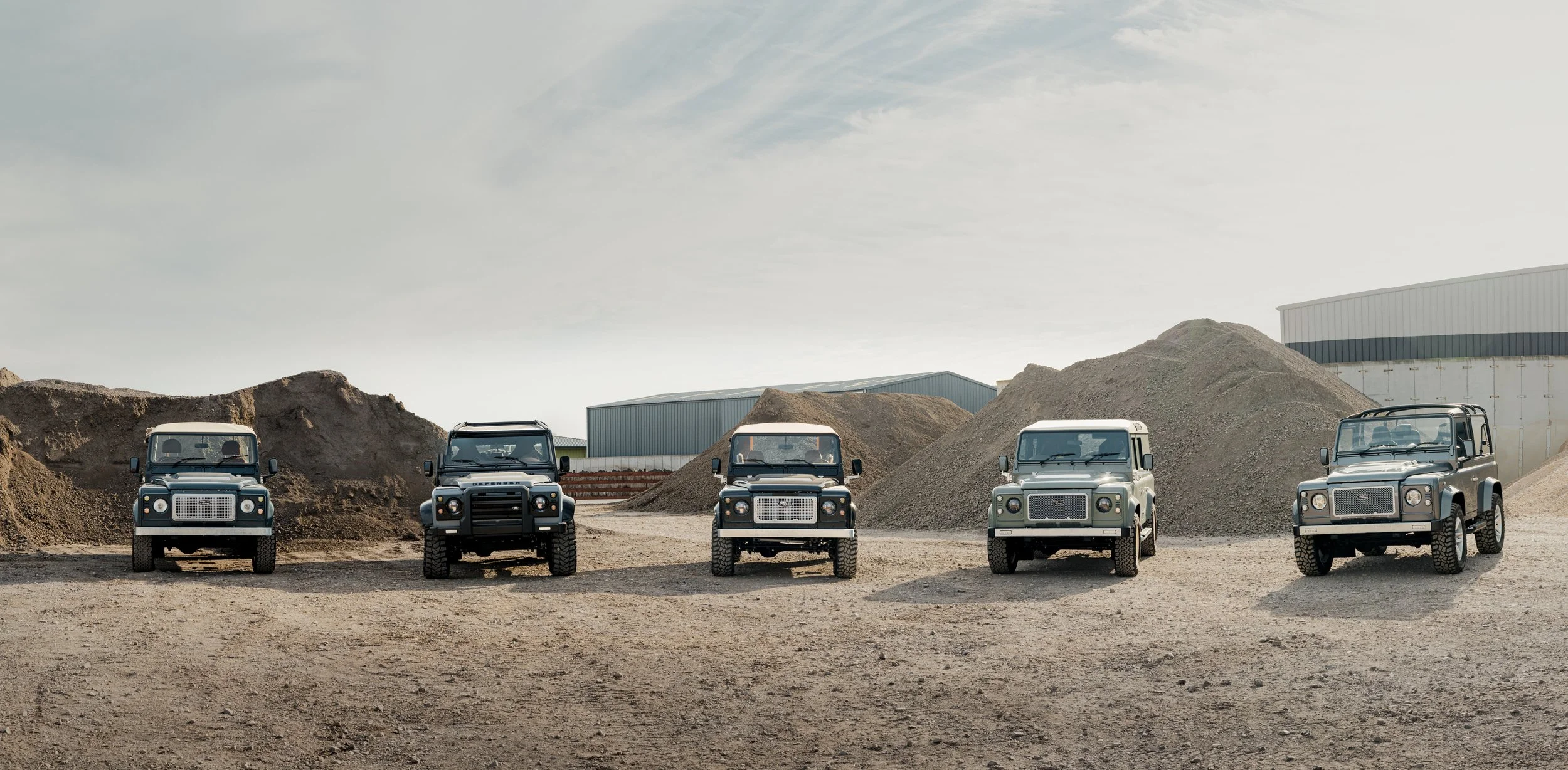
It's the first question almost everyone asks, and most builders won't answer it in public. Here's the direct version: a Shoreline custom Land Rover Defender starts at $135,000 and runs to $200,000 and beyond, depending on the edition, the wheelbase, the drivetrain, and how far the specification goes.
That range is wide for a reason. A Defender 90 Beach — three-door, canvas soft top, half doors, teak load bay — and a Defender 110 Villain on an LS3 V8 with beadlock wheels and a five-door leather interior are two entirely different vehicles that happen to start from the same chassis rail. The car is the same starting point. The work is not.
| Edition | Configuration | From |
|---|---|---|
| Defender 90 Beach | 3-door soft top | $135,000 |
| Defender 90 Heritage | 3-door, hard or soft top | $140,000 |
| Defender 90 Modern | 3-door | $140,000 |
| Defender 90 Villain | 3-door | $185,000 |
| Defender 110 Beach | 5-door soft top | $145,000 |
| Defender 110 Heritage | 5-door | $140,000 |
| Defender 110 Modern | 5-door | $150,000 |
| Defender 110 Villain | 5-door | $200,000 |
All builds available in petrol or diesel, manual or automatic.
Every build is available in gas or diesel, manual or automatic. The 110 sits above the equivalent 90 across the board — longer wheelbase, five doors, middle row seating, more material and more labour throughout.
What you're actually paying for
Over 3,000 hours of work goes into every Defender 90 and Defender 110. That figure is the answer to most of the question. Here's where those hours go.
The donor vehicle
Every build starts with a genuine classic Land Rover Defender, sourced for the right year, the right wheelbase, and the right starting condition. Not a replica, not a rebodied shell.
Good donors have become progressively harder and more expensive to find since production ended, and what you start with dictates what you finish with. A donor with a sound chassis saves weeks of fabrication; one that looks presentable but hides corrosion in the wrong places adds them.
Chassis and corrosion treatment
The vehicle is stripped to a bare chassis. It's inspected, strengthened, and treated for corrosion before being repainted or galvanised.
This is the least glamorous stage and one of the most expensive, because it's almost entirely labour and none of it is visible when the car is finished. It's also the stage that determines whether the Defender is still on the road in twenty years or quietly rusting in five. The reliability of a Defender doesn't come from the badge — it comes from the work done here.
Drivetrain
This is the single largest variable in the final price. Depending on specification, a build gets a rebuilt original engine — a 300TDi or TD5 — or an upgraded TD5 for smoother highway driving. Beyond that sit the full conversions: a GM LS3 V8, a GM LT1 V8 in California-compliant form, a Ford EcoBoost, or an EV conversion.
The engine itself is only part of the cost. Axles, differentials and brakes are rebuilt or replaced. Suspension is specified around how the car will actually be used. And the entire wiring loom is replaced rather than patched, because a thirty-year-old British harness is one of the most common failure points in any classic Defender.
Two builds with identical exteriors can differ substantially on drivetrain alone.
Bodywork and paint
The body is refinished by hand to a luxury automotive paint standard — a standard the original factory never attempted. Custom and period-correct colours, contrast roofs, extended arches, checker plate work and lighting changes all sit here.
Interior
The interior is where a build most obviously separates from a restoration, and where specification runs furthest. It's built, not assembled: hand-stitched leather across seats and dashboard, teak flooring or carpet, Alcantara-effect roof lining, modern gauges, climate control, Apple CarPlay and Android Auto, premium audio.
The item that matters most is the one nobody puts on a spec sheet. Stage one or stage two soundproofing is invisible, adds real cost, and is the difference between a Defender you tolerate at 70mph and one you can hold a conversation in. It cannot be added afterwards.
Testing and handover
Once everything is together, the car goes through a 500-mile road test. Every electrical and mechanical system checked, logged and signed off. Anything not right is corrected before the car leaves the workshop.
The car is then prepared for transport from the UK workshop, road tested again on arrival in the US, and hand-delivered to your location with a face-to-face handover, a 12-month warranty, and an introduction to a local service provider.
That last stretch is real cost that a lot of the market skips, and skipping it is why some builds come back to their builder six months later.
What pushes a build up the range
Roughly in order of impact:
Wheelbase. A 110 costs more than a 90 in every edition — more doors, more seats, more of everything.
Drivetrain. A V8 or EcoBoost conversion is the largest single swing available.
Edition. The Villain package — extended arches, lifted suspension, beadlock wheels, heavy-duty bumper, A-bar, full leather with middle row — carries substantially more content than a Beach or Heritage build.
Interior specification. Stage two soundproofing, TDCI dashboard upgrade, extended leather, rear air conditioning, upgraded audio.
Bespoke additions. A full roll cage, one-off fabrication, non-standard seating layouts.
Wheels, paint colour and badging feel significant when you're specifying the car but move the total far less than the five above.
Why a cheap restomod is usually expensive
There's a tier of the market building Defenders quickly and selling them below these figures. Some of those cars are honest. Many are a good paint job over an unaddressed chassis, an engine that was cleaned rather than rebuilt, a patched loom, and an interior fitted over bare metal with no deadening.
The cost of those cars isn't the purchase price. It's what you spend two years later having the work done properly, on a car that now has to come apart again.
Five questions worth asking any builder:
Was the vehicle stripped to a bare chassis, and can you see photographs of your car at that stage?
What specifically was done to the chassis and bulkhead?
Was the engine rebuilt or refurbished, and to what specification?
Was the wiring loom replaced or patched?
What soundproofing was fitted, and to which surfaces?
A builder documenting the process stage by stage answers all five without hesitating. One who can't, can't.
How the build actually runs
Every Shoreline Defender goes through nine defined stages: design consultation, order confirmation, physical sample pack, donor sourcing and chassis work, specification confirmation, drivetrain and body, interior refit, final fit and testing, then delivery and handover.
From the point you sign, you get login access to a customer portal with weekly photo updates and stage-by-stage tracking. You see the chassis when it comes out of the donor, the body when it goes into paint, and the interior while it's being trimmed. You approve materials and specifications as the build progresses rather than signing a sheet at the start and hoping.
There are two formal decision points — the initial specification at order, and a final confirmation once the chassis is painted and the body is ready for prep. After that second window, parts are ordered and the build moves.
See the full nine-stage process and all four editions at Shoreline Vehicles.
Frequently asked questions
How much does a custom Land Rover Defender cost? Shoreline builds start from $135,000 for a Defender 90 Beach and rise to $200,000 and above for a Defender 110 Villain. Drivetrain conversions, wheelbase, and interior specification are the main variables.
Why is a Defender 110 more expensive than a Defender 90? The 110 is a longer-wheelbase, five-door configuration with a middle row, more seating, more trim, and a longer soft top or body. More material and more hours across every stage of the build.
What engine options are available? Rebuilt original 300TDi or TD5 diesel, upgraded TD5, or a conversion to a GM LS3 V8, GM LT1 V8 (California compliant), Ford EcoBoost, or full EV. Automatic transmission conversion is also available.
How long does a custom Defender build take? Over 3,000 hours of work go into each vehicle. [CONFIRM TYPICAL LEAD TIME IN MONTHS] Bespoke fabrication and long-lead drivetrain components extend it.
Does a custom Defender come with a warranty? Yes — a 12-month Shoreline warranty, alongside an introduction to a trusted local service provider for ongoing maintenance.
Do you deliver outside the UK? Yes. Builds are prepared for transport from the UK workshop, road tested again on arrival in the US, and hand-delivered to your location with a face-to-face handover.
Every build starts the same way: a conversation about how you plan to use the car and what you want out of it. Get in touch with SVD Group and we'll come back with the options, the timeline, and a realistic figure for what you have in mind.